
Performance, Hydration, Recovery
How Hockey Players Should Eat, Drink & Recover
Key Takeaways
Eat 1–4 hours before games, target 1–4 g of carbohydrate per kilogram of body weight (0.45-1.81 g/lb).
Drink 5–7 mL/kg fluids 4 hours pre-game, then 3–5 mL/kg 2 hours before.
Consume 30–60 g of carbohydrate and sodium-rich fluids per hour of play.
Rehydrate with 20–24 fl oz fluid per pound lost.
Eat 20–40 g of protein right after practice or games to support recovery.
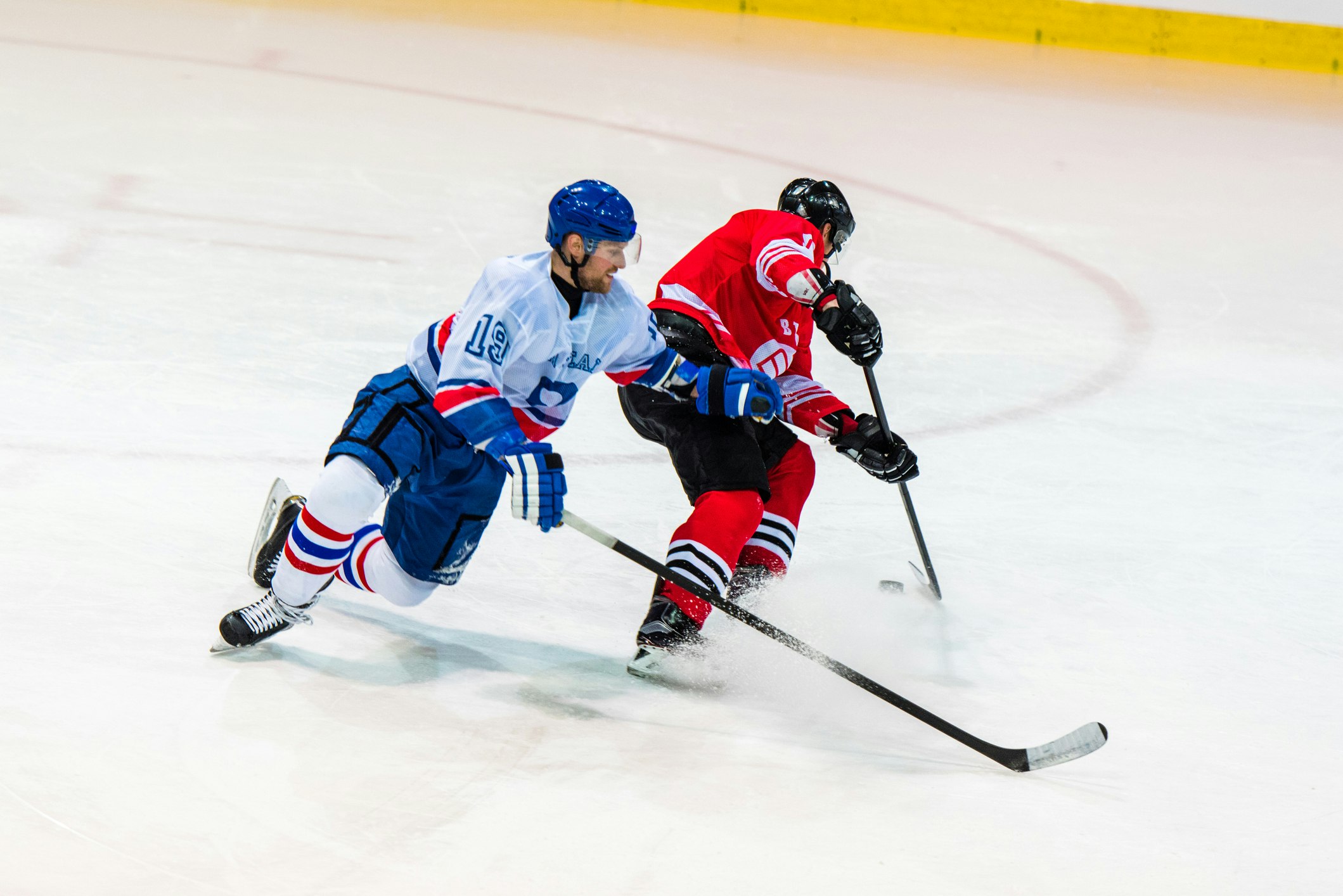
When the puck drops, every player’s performance depends not only on skill and effort—but also on fuel. Ice hockey pushes the limits of power, endurance, and recovery. Players sprint, stop, and collide for over 2 miles each game while wearing layers of gear that trap heat and challenge hydration. To stay sharp from the first shift to overtime, hockey players need a plan that fuels muscles, manages fluids, and supports recovery after every session.
This guide breaks down how to eat and drink before, during, and after practices and games to help maximize performance all season long.
Why Nutrition Goals Matter as Much as Performance Goals
Hockey teams plan around practice schedules, game strategies, and strength training—but often skip nutrition planning. That’s a mistake.
A simple goal like “arrive fueled and hydrated for every practice” can be as powerful as a new training program. Hockey’s stop-and-go nature relies heavily on stored carbohydrates (glycogen) for energy. Without enough, players fatigue faster, lose focus, and struggle with late-game execution.
Hydration matters just as much. Even though the rink feels cool, gear and exertion trap heat, raising sweat rates and increasing dehydration risk. The result? Higher heart rate, slower reaction time, and less power on the ice.
Pre-Game Fueling Guide: What to Eat & Drink Before Hockey Practices or Games
The hours before a game or practice are your window to top off energy stores. Carbohydrates are the main fuel for skating, sprinting, and shooting. Eating the right type and amount ensures your muscles have what they need to perform.
Timing & Composition:
Eat 1–4 hours before activity.
Target 1–4 g of carbohydrate per kilogram of body weight (0.45-1.81 g/lb).
The closer to start time, the less fat, fiber and protein should be in the meal/snack to avoid stomach discomfort.
Fluid Preparation:
Hydrate early—drink 5–7 mL of fluid per kilogram of body weight (2.3-3.2 mL/lb) about four hours before activity. If urine is dark or output is low, add another 3–5 mL/kg (1.4-2.3 mL/lb) two hours before.
Example (for a 180-lb/82-kg player):
A balanced pre-game meal could include:
A turkey sandwich on a bagel
Pretzels and an apple
20 fl oz of Gatorade Thirst Quencher
That combination provides around 160 g of carbohydrates, helping replenish glycogen and deliver electrolytes before hitting the ice.
Quick Carbohydrate Boosts (within 1 hour of play):
6 Gatorade Energy Chews (21 g carbs, 70 mg sodium)
1 medium banana (27 g carbs)
17 pretzels (23 g carbs, 450 mg sodium)
These small snacks or sips can take the edge off hunger and begin fueling your muscles before the first shift.
In-Game Hydration: Stay Fueled and Focused on the Ice
To hydrate the right way during a game, you first need to understand your own sweat rate—because every player’s needs are different.
How to Measure and Replace Your Sweat Loss:
Even in cold arenas, dehydration can sneak up fast—especially with full pads and helmets. A 2% loss in body weight from fluid loss can impair reaction time, strength, and focus.
To personalize your hydration plan:
Weigh yourself before and after practice.
Track fluid consumed.
Use this equation: Sweat rate (L/h) = (Weight loss in lbs + fluid intake in L) / exercise time (h) - Use the Gatorade Sweat Loss Calculator!
Professional players lose on average about 2 L/hour; junior players around 1.6 L/hour. Each player has a unique sweat rate though, so knowing your number helps you replace what you actually lose.
Carbohydrate and Electrolyte Strategies for Hockey Players:
Begin hydrated (urine should be pale yellow).
Sip fluids at every intermission and line change based on your hydration plan.
Use sports drinks that contain sodium and carbohydrates to replace electrolytes and fuel muscles.
Carbohydrate Target:
Team-sport athletes, including hockey players, should aim for 30–60 g of carbohydrate per hour of play. That could look like:
16 fl oz Gatorade Thirst Quencher = 28 g carbs
32 fl oz Gatorade Thirst Quencher = 56 g carbs
32 fl oz Gatorade Lower Sugar + 6 Gatorade Energy Chews = 38 g carbs
Strategic sips between shifts can help maintain your performance s throughout all three periods.
Post-Game Recovery Nutrition: What to Eat, Drink & Do After Hockey Games
After the game, recovery starts the moment you step off the ice. Muscles need carbohydrate to restock glycogen and protein to rebuild tissue.
Carbohydrate Recovery:
If you have less than 8 hours before your next training session or game, consume 1.0–1.2 g of carbs per kg of body weight (0.45-0.54 g/lb) every hour for 4 hours.
If you have more time between sessions, aim for 5–7 g/kg/day (2.3-3.2 g/lb) during moderate training or 6–10 g/kg/day (2.7-4.5 g/lb) during intense training phases.
Protein for Muscle Rebuilding:
Eat ~20–40 g of protein (or 0.25–0.3 g/kg) as soon as possible after practice or competition. Choose high-quality, fast-digesting options rich in leucine—such as milk, whey, eggs, or lean meat. Continuing to eat protein every 3-4 hours will help the athlete continue to recover throughout the day.
Plant-based athletes should mix sources (like , beans, peas, lentils and grains) to ensure a full amino acid profile. Soy and quinoa are the only plant protein sources that contain all of the essential amino acids the body cannot make.
Fluid Replacement:
Rehydrate with 20–24 fl oz of fluid with sodium per pound of body weight lost. Sports drinks or electrolyte beverages are effective options.
Practical Example - Blake’s Routine:
Blake, a junior hockey forward, weighs 180 lbs and plays high minutes.
Before games: He eats homemade pizza bread (carbs from French bread and sauce, minimal fat) and drinks Gatorade Thirst Quencher for extra energy and fluids.
During games: He alternates between Gatorade Lower Sugar and water to replace about 60 oz of fluid and 25 g of carbohydrate.
After games: He uses a Gatorade Recover, Gatorade Zero or Whey Protein Bar to get 20 g of protein and electrolytes while rehydrating.
This simple, repeatable plan helps him maintain performance through long seasons and back-to-back games.
Takeaway: Make Nutrition a Team Habit
Fueling and hydration are as critical as skill drills or conditioning. For hockey players, success starts long before the puck drops—with a plate, a bottle, and a plan.
When teams make fueling a shared standard—just like warm-ups and recovery—they build consistency that carries through an entire season.
Gatorade Sports Science Institute